Logistics Knowledge
Sea Freight from China: FCL vs LCL, Costs and Transit Times
A practical guide to ocean freight from China: how FCL and LCL differ, what really drives your shipping cost, and how to plan around realistic transit times.
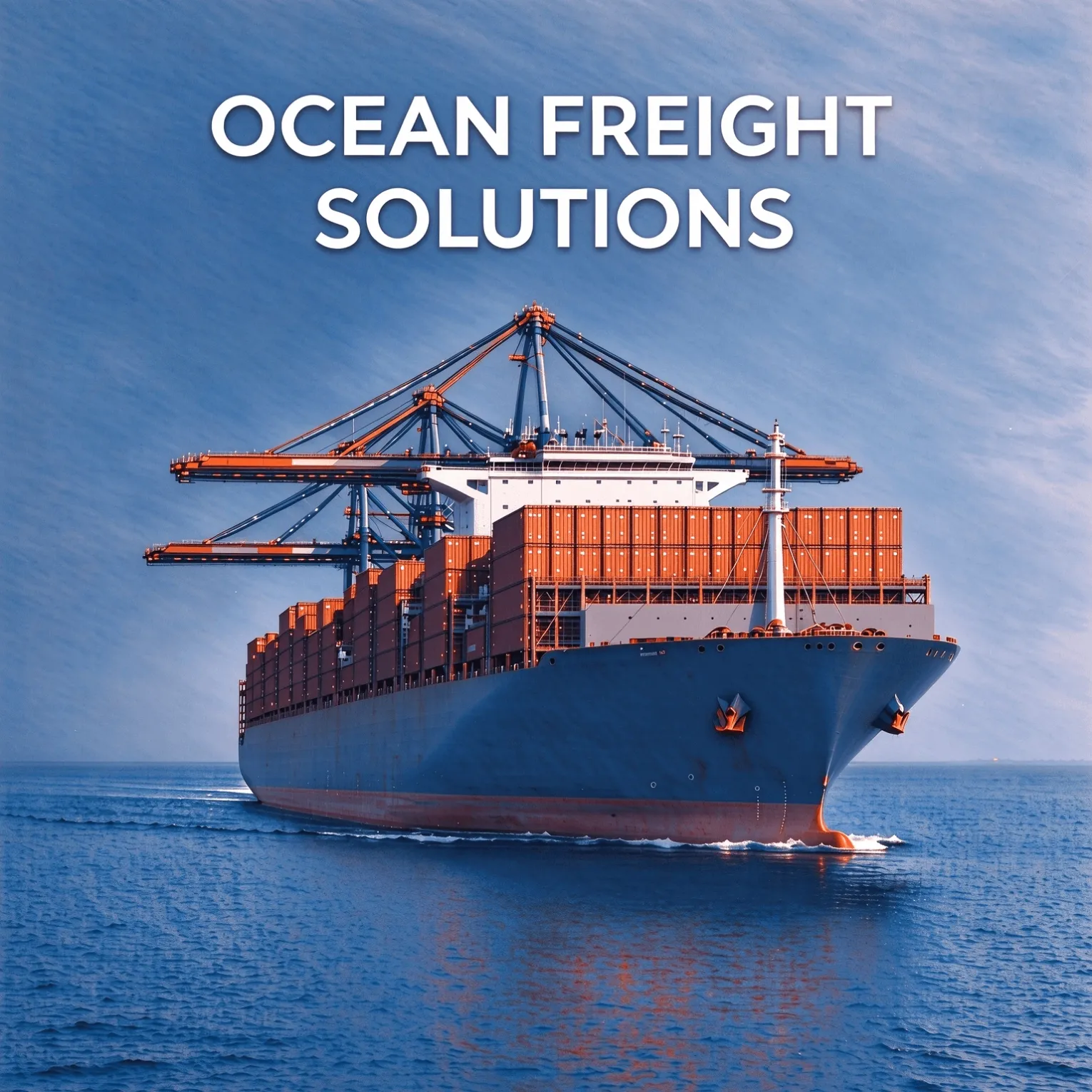
If you are buying goods from China and the shipment is too big for express parcels, ocean freight is usually the most cost-effective way to move it. The first decision most importers face is simple to state but easy to get wrong: book a full container (FCL) or share space in one (LCL). This guide explains both options in plain language, what actually drives the price, and the transit times you can realistically plan around.
What FCL and LCL Actually Mean
FCL (Full Container Load) means you book an entire container for your cargo — commonly 20ft, 40ft, or 40ft high-cube. Your goods are loaded once at origin and sealed until they reach the destination. LCL (Less than Container Load) means your cargo shares a container with other shippers' goods, and you pay for the space your cargo occupies, measured in cubic meters (CBM).
The common rule of thumb: if your shipment fills more than roughly half of a 20ft container (around 13-15 CBM or more), FCL often becomes cheaper per unit — and it also means less handling, because your goods are not consolidated and de-consolidated along the way. Below that volume, LCL lets you ship without paying for empty space.
Not sure whether your cargo should go FCL or LCL? The answer depends on volume, weight, and how urgent the goods are — which is exactly what a freight quote is for.
What Really Drives Your Shipping Cost
Ocean freight pricing is not one flat number. The main factors are the trade route and season, the volume (CBM) or container type you book, the weight of your cargo, and the destination charges at the port of arrival. Peak season demand typically pushes rates up, while fuel and port congestion add surcharges that change over time.
That is why a serious freight forwarder quotes each shipment individually instead of publishing fixed prices. Any published 'price list' you see online is, at best, a snapshot that may already be out of date. Send your cargo details — product name, dimensions, weight, port of loading and destination — and the quote you receive will reflect the current market, not last month's.
Transit Times You Can Plan Around
Transit time depends mainly on the route. Sailings from major Chinese ports to the US West Coast commonly take around two to three weeks, while US East Coast services via the Panama Canal often run longer. Services to Northern Europe typically take around four to six weeks door-to-port, depending on the routing and transshipment.
These are port-to-port planning figures. If you need door-to-door delivery, add inland trucking, customs clearance, and possible port congestion on both ends. A practical habit: plan your inventory around the longer end of the range during peak season, and keep a faster mode — air freight or international express — as a backup for urgent replenishment.
Which One Fits Your Cargo
Choose LCL when
Your shipment is small (roughly 1-13 CBM), you want the lowest cost for a flexible schedule, and your goods can tolerate extra handling during consolidation and de-consolidation.
Choose FCL when
Your shipment fills a large part of a container, your goods are fragile or high-value and benefit from less handling, or you want a sealed container moving under a single, more predictable schedule.
How SUBD Handles Ocean Freight from China
SUBD Logistics provides cost-effective FCL and LCL solutions from Chinese ports to global markets, with our operational base near Shenzhen Bao'an International Airport and a 5,000-square-meter warehouse supporting consolidation, storage, and 24/7 cargo handling before sailing.
Through our partner network covering more than 200 countries and regions, we coordinate the full chain: cargo receiving and warehousing in China, export documentation, container booking, and coordination through to destination. Key markets we serve include the United States, Europe, Mexico, Australia, Pakistan, the UAE, and Saudi Arabia.
The Short Version
Small shipment, flexible timing: LCL. Large or fragile shipment, one predictable schedule: FCL. Prices move with the market, so ask for a current quote with your real cargo details. If you are planning a sea freight shipment from China, send SUBD your cargo information — product, volume, weight, and destination — and our team will come back with a routing plan and a quotation that matches today's market.